


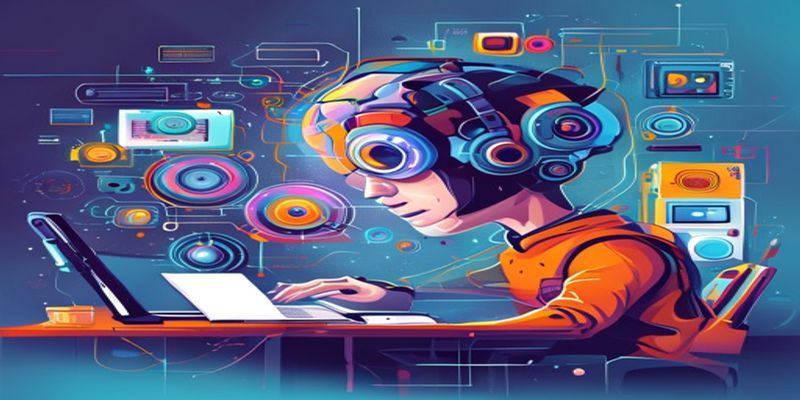
Unleash Creativity: How Automation Tools Empower Artists and Designers
The canvas of creativity has always demanded boundless imagination, meticulous skill, and often, an immense amount of time. For artists, designers, writers, and musicians alike, the pursuit of a unique vision can be exhilarating, yet it’s frequently entangled with administrative burdens, repetitive tasks, and the looming threat of creative block. This evolving landscape now sees a powerful ally emerging: automation. Far from stifling the artistic spirit, advanced automation tools for creative professionals are proving to be transformative, liberating creators from the mundane to focus on what truly matters – their artistic vision.
We’re moving beyond a world where technology is merely a medium and into an era where it actively collaborates. Understanding how to leverage these digital assistants is no longer an advantage; it’s becoming an essential skill for anyone serious about elevating their craft and maintaining relevance in a competitive creative economy.
Beyond the Brushstroke: Redefining the Creative Workflow
For centuries, the creative process involved a solitary journey of ideation, execution, and refinement. While the core of this journey remains deeply human, the journey itself can be optimized. Imagine the hours spent resizing images for different platforms, generating endless variations of a logo, or drafting initial concepts that may never see the light of day. These are crucial, yet often tedious, steps that can drain energy better spent on conceptualizing and perfecting.
The misconception that automation somehow diminishes authenticity is quickly fading. Instead, automation serves as a powerful augmentation. It’s about offloading the grunt work, not outsourcing the soul. By adopting sophisticated automation tools, creative professionals can transform their workflows, making them more efficient, more experimental, and ultimately, more fulfilling.
Automating the Mundane, Amplifying the Vision
Let’s delve into specific areas where automation tools are making a tangible difference for artists and designers.
Streamlining Repetitive Tasks
One of the most significant benefits of automation is its ability to handle tasks that are essential but consume valuable creative time. Think about the countless hours spent on:
- Image Resizing and Formatting: Tools like Adobe Photoshop’s batch processing or online services can instantly adapt images for web, print, or social media specifications.
- File Organization and Archiving: Automated rules can sort and categorize digital assets, ensuring that project files are always where they need to be.
- Social Media Management: Platforms such as Buffer or Later allow artists to schedule posts across multiple channels, freeing up time from daily manual updates.
- Basic Video Editing: Tools like Descript allow editing video by simply editing text transcripts, drastically reducing time on initial cuts or re-arrangements.
By automating these tasks, creatives regain precious hours that can be reinvested into conceptual development, client interaction, or even personal growth.
Supercharging Brainstorming and Idea Generation
Creative block is a universal challenge. Automation tools can act as an invaluable brainstorming partner, offering new perspectives and rapidly generating diverse concepts.
- AI Writing Assistants: For graphic designers creating mock-ups or artists needing project descriptions, tools like Jasper.ai or Copy.ai can generate taglines, headlines, or even full paragraphs of text, sparking new ideas or refining existing ones.
- AI Image Generators: Platforms like Midjourney or DALL-E 3 are not meant to replace artists but can be incredible sources of inspiration, generating mood boards, stylistic variations, or unconventional compositions based on text prompts. They allow for rapid visual prototyping that was previously impossible.
These tools don’t dictate creativity; they expand its horizons, helping professionals break through stagnant thought patterns.
Content Generation and Augmentation
Beyond ideation, automation can actively assist in the creation of content elements, especially for those working across multiple disciplines.
- Design Variation Tools: Services like Canva’s Magic Design feature can generate multiple design layouts and variations from a single input, accelerating the initial design phase.
- AI Music and Sound Effects: For animators or video creators, tools like AIVA or Soundraw can generate unique, royalty-free background music or sound effects tailored to specific moods and styles, enhancing the overall production value without requiring a separate composer.
- Copywriting for Marketing: Many tools can adapt existing content into various formats, ensuring consistency across portfolios, websites, and promotional materials.
This augmentation means creatives can maintain a consistent output and explore new mediums with greater ease.
Enhancing Production and Post-Production
The refinement stage of any creative project can be the most time-consuming. Automation streamlines these critical steps:
- AI-Powered Photo Editing: Adobe Photoshop’s Generative Fill, Lightroom’s AI Denoise, or Luminar Neo’s Sky Enhancer features leverage AI to perform complex editing tasks like object removal, background changes, or image enhancements with remarkable speed and precision.
- Video Enhancement and Animation Assistants: Tools such as RunwayML offer AI-powered features for video generation, style transfer, rotoscoping, and other intensive animation tasks, dramatically reducing manual labor.
The precision and speed offered by these automation tools allow for faster iterations and a higher quality final product, giving creatives more time to perfect their unique aesthetic.
Choosing the Right Tools: A Creative’s Toolkit
Navigating the vast landscape of automation tools can be daunting. The key is to identify specific pain points in your workflow and seek out solutions that directly address them. Consider:
- Integration: How well does the tool integrate with your existing software and platforms?
- Learning Curve: Is it intuitive, or will it require significant time investment to master?
- Specific Needs: Does it solve a genuine problem, or is it just a novelty?
- Cost-Benefit: Does the time saved and value gained justify the subscription or purchase price?
Remember, the human element remains paramount. Automation tools are designed to be assistants, not replacements. Your unique artistic eye, critical judgment, and emotional intelligence are irreplaceable. You are the conductor of this technological orchestra.
The Future of Creative Work: A Collaborative Symphony
The trajectory of automation in creative fields points towards an increasingly collaborative future. AI and automation will become seamlessly integrated into creative suites, working quietly in the background, anticipating needs, and suggesting improvements. This evolution will allow creative professionals to spend less time on the mechanics of creation and more on the profound act of imagining, innovating, and inspiring.
Artists and designers of tomorrow won’t just wield traditional tools; they’ll skillfully direct powerful AI assistants, curating results, making executive artistic decisions, and focusing their energies on the high-level conceptual work that only a human mind can truly deliver.
Frequently Asked Questions About Automation in Creative Fields
Will AI replace human artists and designers?
No, AI and automation are tools designed to assist and augment human creativity, not replace it. While AI can generate impressive outputs, it lacks true understanding, emotional depth, and original intent. Human artists provide the vision, direction, and critical judgment, making the final creative decisions and infusing the work with unique meaning.
Are automation tools expensive for solo creatives or small studios?
Many automation tools offer a range of pricing tiers, including free versions with limited features, affordable monthly subscriptions, or one-time purchases. There are solutions available for every budget, from robust professional suites like Adobe Creative Cloud to specialized AI services tailored for specific tasks. Evaluating the time saved versus the cost is key.
How do I choose the best automation tool for my specific needs?
Start by identifying the most time-consuming or repetitive tasks in your current workflow. Research tools that specifically address these pain points. Look for user reviews, trial periods, and consider factors like ease of use, integration with your existing software, and customer support. Prioritize tools that genuinely enhance your efficiency and creative output.
Can automation help with client communication or project management?
Absolutely. While not strictly ‘creative’ automation, tools like email automation (for sending proposals or follow-ups), CRM systems for client tracking, and project management software (e.g., Asana, Trello) can significantly streamline administrative tasks. Some even integrate with AI to summarize communications or suggest next steps, freeing up time for creative work.
What are the ethical considerations when using AI for creative work?
Ethical considerations are crucial. These include concerns about data privacy, copyright (especially with AI models trained on existing art), bias in AI-generated content, and the transparent disclosure of AI use. Creative professionals should stay informed about the evolving legal and ethical landscape, ensuring they use tools responsibly and attribute sources where appropriate.
Ultimately, automation tools for creative professionals are not just about doing things faster; they’re about enabling artists and designers to do more, explore more, and create more impact. By embracing these technological partners, creatives can truly unleash their potential, transforming their workflows from arduous to artful, and from routine to revolutionary.
Category: AI & AUTOMATION
Tags: creative automation, AI tools for artists, design workflow, artistic productivity, creative technology, design tools, artist empowerment, digital art